Spaced repetition, APIs, and generative AI
Some of my recent experiments have combined almost every major theme of this blog:
- I've put a bunch of work into expanding, documenting, and testing the Zippyflash API.
- This has been useful for creating sets of flashcards based on a document: I now frequently ask a fast model to make me cards according to certain specifications about the material. The API and underlying data model are structured so that there's a review step between the LLM submitting the candidates and their being full-blooded members of my flashcard library.1
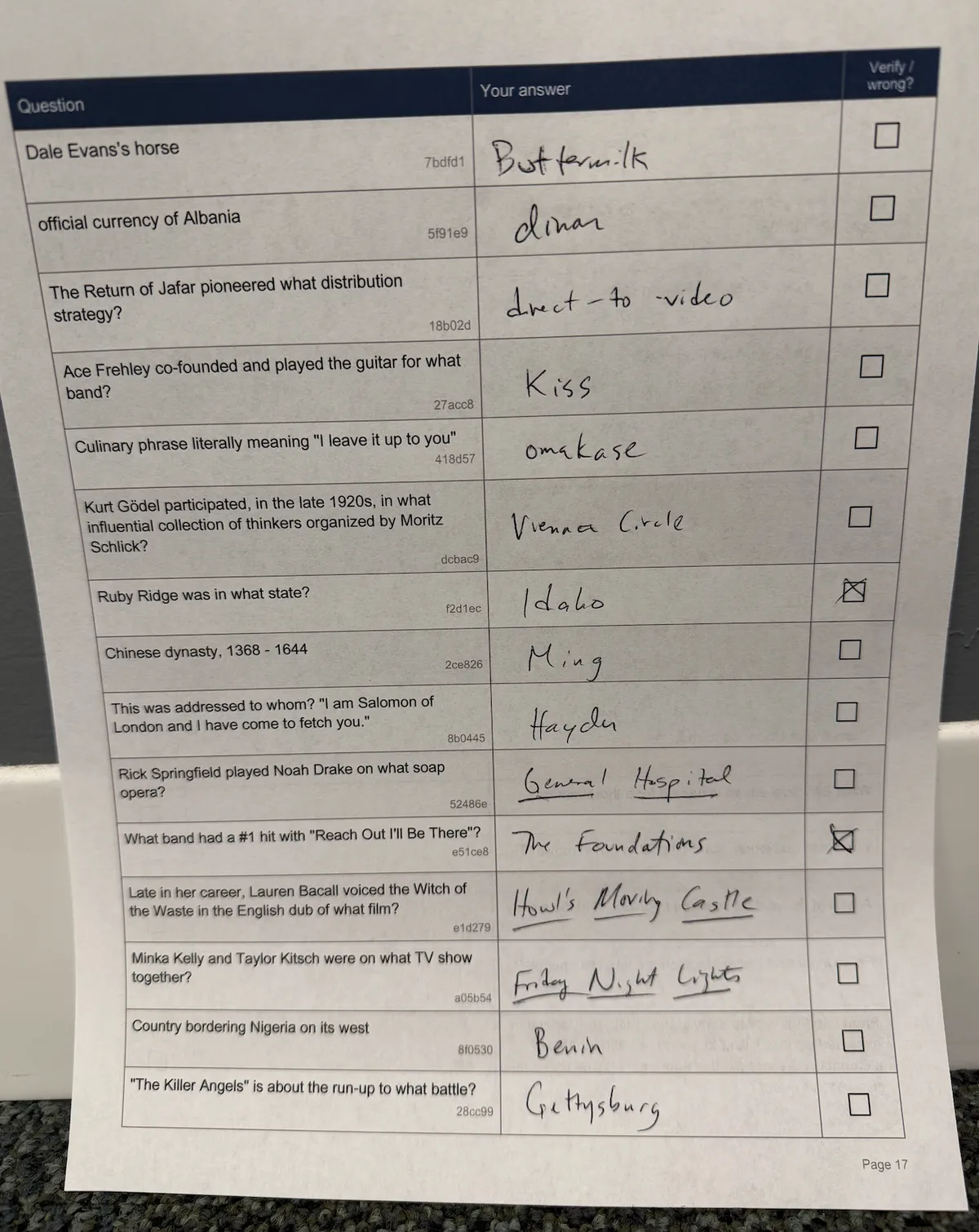
- As part of my going-analog effort, I've experimented with asking an LLM to (i) find all my due cards that don't have images, (ii) create PDF worksheets from them, and then (iii) mark me right or wrong when I return photos of the completed worksheets to it. I love having the option to do my "flashcarding" in this longhand, analog way. Moreover, I've found the LLM (usually
gpt-5.6-sol low, in this case) to be more than good enough at handwriting recognition and grading ambiguous answers. (A very short conversation has always been enough to resolve ambiguities and clear up obvious mistakes.) - This is evidence for the James Somers hypothesis that LLMs might allow us to use computers less, or at least less directly.
- I've also been able to use the LLM-API combination to do some other things that would otherwise be cumbersome ("I have too many cards to do right now; please leave cards fitting descriptions X and Y due, and also leave 10% of the remainder due, and spread the rest out over the next 10 days").2
- In the wake of my recent return to Thinking Poker, I'm helping a bunch of poker players try to make poker-training cards. The first thing I've learned is that basically everyone wants something different: different situations, different formatting, different answer granularity, or something else. In my early experiments with them, the "tell the LLM what you want and have it interact with the tool via API" technique is, again, the best approach I've found.3
Here as elsewhere, I don't know what the future of mass-market software will look like. There are good reasons to think it won't involve chatbots (the way they look in July 2026) or command-line LLM invocations. For now, however, I'm having a lot of luck with the general approach of (i) constructing data models and APIs with LLM consumption in mind, (ii) using them via LLM, and (iii) taking a creative, experimental approach to them as a user.
By the way, in case you're curious what my flashcards-as-worksheets look like, here is one of many sheets of paper I now have lying around:4
More and more, however, the review phase effectively happens in conversation between the LLM and me, and I can quickly approve the whole batch.↩
My interviews suggest that many spaced repetition users want to do this and either don't have a way to do it or resort to hacks.↩
If this sounds interesting to you, whether for poker or anything else, please don't hesitate to write to me.↩
By the way, there are two wrong answers here: the Albanian currency is the lek (I got it mixed up with Algeria), and "Reach Out I'll Be There" is by The Four Tops, not The Foundations.↩